-
Responsible Management
Responsible Management
Explore this section to find information and resources designed to support managers and regulators

-
Preparing for a trip
Preparing for a Trip
Explore this section to find information and resources useful to anyone interested in learning more about responsible whale watching throughout the world
-
Industry support
Industry Support
Explore this section to find information and resources useful to whale watching tour operators and guides or other industry professionals
-
Species information
Species Information
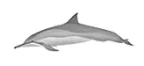
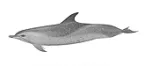
Click on one of the icons to the right to reveal a full description of the species with photos and labeled illustrations useful for species identification, as well as information on biology, ecology and conservation status of each species. Click here to find downloadable PDF fact sheets for each of the species featured on this site.










History and context
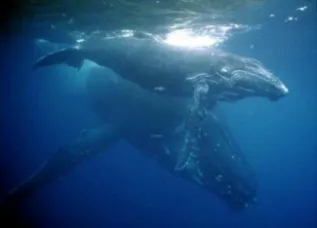
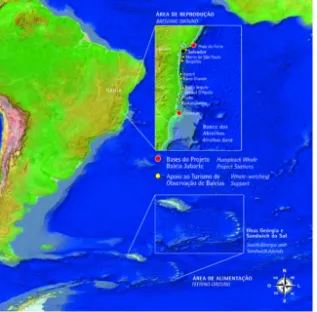
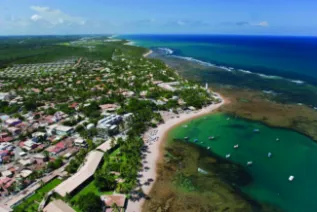
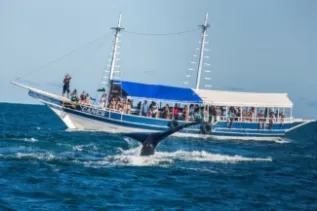
Whale watching was first established in Brazil on the Abrolhos Bank in the 1990s, becoming increasingly popular over the following 10 years. The industry focuses on a population of humpback whales that migrates from the Antarctic to these offshore islands to mate and calve and nurse their young each year, and this population is increasing rapidly following the cessation of commercial whaling1-4. In 2001 whale watching expanded further north to Praia do Forte, and from there to various other coastal towns in the Bahia state of Brazil. Between 2001 and 2004, whale watching in Praia do Forte was limited to a single operator that worked in close collaboration with the research and conservation group Projeto Baleia Jubarte (Humpback Whale Project or PBJ)5. Whale watching was rewarding on this coastline, where the continental shelf is narrow, and humpback whales are often found closer inshore than other areas of Brazil’s coast. Recognizing the value of this unique narrow shelf habitat, the government created a marine protected area of roughly 3,600 square kilometers called the North Coast Continental Shelf Protected Area (Área de Proteção Ambiental da Plataforma Continental do Litoral Norte).
Since 2004 whale watching has continued in this protected area, gradually increasing to the point where four operators based in Praia do Forte were running an average of 13 trips per day in 2015, accommodating over 3,000 tourists over the season6. The four operators offering tours in Praia do Forte all collaborate with the PBJ, hosting researchers who collect photo-identification and other whale sightings data from the tour vessels, and even making financial contributions to the NGO’s research and conservation efforts6. PBJ staff train vessel operators and guides from all four businesses, and help to promote awareness of the need to respect approach guidelines and minimize disturbance to whales6. They also help to ensure that operators include a strong element of education in their tours.
As of the 2016-17 whale watching season, the industry seemed to be in balance and harmony in Praia do Forte. However, noting trends of increasing tourism numbers throughout Brazil, and conscious that other whale watching destinations around the globe have experienced uncontrolled explosions of tourists and whale watchers, the PBJ initiated an exercise to try and assess the whale watching carrying capacity of the town and the protected area in order to be prepared for possible expansion.
Regulations and management measures
There are currently almost 20 legal regulations especially created for the protection of cetaceans that occur within Brazilian waters, including the 2008 decree N° 6.698, which declared the marine waters under Brazilian jurisdiction a Whale and Dolphin Sanctuary.
Regulations specific to whale watching were first brought into force in 1990. In 1996, ordinance N° 2.306 was amended with ordinance IBAMA N° 117. Among other things, the new regulation imposed a 100 m minimum approach distance for any species of whale; a minimum altitude of 100 m from cetaceans for any aircraft; a maximum time limit of 30 minutes to observe any group of whales; a minimum distance of 50 m for diving or swimming in the vicinity of any species of whale; and established standards for the operation of tourism vessels within protected areas. In 2002, ordinance IBAMA N° 24 introduced some amendments to ordinance N° 117, requiring that boat engines are kept neutral during the observation of humpback whales, and turned off or kept in neutral for other species of cetaceans. The new rule also stipulated that a maximum of two vessels may approach an individual or group of whales simultaneously.
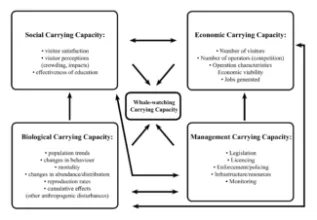
While approach guidelines are clear, current national regulations do not require any special permitting for tour operators to offer whale watching. As such, there is no mechanism to cap or control how many whale watching operators, vessels or tours are permitted in a particular region at any given time. In order to be prepared for possible expansion of tourism and whale watching activities in Praia do Forte, the PBJ attempted to use a framework to calculate the maximum carrying capacity for the region. This framework would take into account four different types of carrying capacity6,7:
- Biological carrying capacity – from the perspective of the whales- how many boats or tours can be endured per day/week before the short term impacts of their presence (which have been well documented in several studies8-11) translate into long term impacts such as reduced fitness or reproduction12-14 or movement away from the area of disturbance15?
- Social carrying capacity – from the tourists’ perspective – at what point does the number of other tour boats and/or tourists begin to interfere with their enjoyment of the whale encounter, or make them worry that they are negatively affecting the whales? Research in other locations has shown that issues of crowding are important to tourists’ perception and enjoyment of whale-watching16-18.
- Economic carrying capacity - from the perspective of the tour operators – at what point does the supply of tours exceed the demand? When this happens, tour operators will be competing for tourists, possibly driving prices for tours down and either decreasing the income for all operators or causing some to profit while others fail.
- Management carrying capacity – from the perspective of the local government/park authorities/local stakeholders – is a management system in place, and if so, at what point does the number of tours being offered become too difficult to administrate, monitor and enforce, or start to interfere with other (necessary) coastal activities?
Lessons learned
In applying the four-part carrying capacity model to whale watching in Praia do Forte, the authors from the PBJ determined that at the moment, whale watching seems to be operating within its carrying capacity, and a number of strengths can be recognized in each of the four areas:
- In terms of biological carrying capacity, whales are not experiencing undue pressure, as the number of trips each day is still limited and the whales’ average residence time in Praia do Forte is only 5.3 days19, limiting the amount of time that they are exposed to whale watching activities. Researchers have documented a high rate of tour operator compliance with approach guidelines, limiting the potential disturbance from engine noise and vessel presence20.
- In terms of social carrying capacity, the majority of tourists are highly positive about their whale watching experiences in Praia do Forte. 96% of tourists interviewed in 2015 said that they would go whale watching in Praia do Forte again, and 76% rated the boat conduct of the operator as excellent6.
- The industry also seemed to be operating well within economic carrying capacity, with three of five tour operators believing that there was room for more vessels to offer tours, as long as the demand from tourists was available. Only one operator felt that the industry should not expand further6.
- The Industry has also not yet exceeded management capacity, with researchers noting high rates of compliance with approach regulations20. A strong collaboration between researchers and all four operators ensures that operators have a high level of awareness of the whales’ conservation needs and are willing to invest in conservation-based research and management measures.
However, the PBJ authors of the carrying capacity study also highlight potential weaknesses in the current system, and make a number of recommendations for future management measures:
- Research has shown that female humpback whales with calves are concentrated closer to shore, particularly toward the end of the whale watching season when calves are nursing in order to gain as much weight and strength as possible before migrating to Antarctic feeding grounds4,21. Calves are most vulnerable to the potential impacts of whale watching, as repeated vessel approaches could interrupt their nursing and jeopardize their growth. If the whale watching industry continues to expand in Praia do Forte, managers may consider introducing more protective approach guidelines for mothers and calves (e.g. minimum approach distances of 300m rather than 100m, or a time limit of only 15 minutes) , or implementing time-area closures for the areas most used by mothers and calves toward the end of the season6.
- While some whale watch operators in Praia do Forte believe that there is room for the industry to expand, at least one feels that it should not6. Scientific research of vessel impact on whales’ behaviour, tourist satisfaction and operator satisfaction/success should be continued to monitor the industry and attempt to quantify the maximum number of tours that could be conducted on a daily basis before the carrying capacity from a biological, social, or economic standpoint is exceeded. Once this is determined, a permit system could be put in place to cap the number of operators or vessels that are allowed to operate in a particular area6.
- There has been little or no government involvement in the management of the whale watching industry in the state of Bahia6. So far, the effective collaboration between other stakeholders – namely the NGO responsible for research and education and the tour operators – has been sufficient to manage the industry, especially as tour operators have felt a sense of ownership and involvement in their own regulation. This reliance on self-regulation, however, does rely on all of the partners playing by the rules and the introduction of new operators may lead to a risk of greater competition and lower levels of collaboration and/or compliance.
For more information about management of whale watching in the Praia do Forte/Bahia, contact:
The Humpback Whale Project in Brazil (Projeto Baleia Jubarte)
http://www.baleiajubarte.org.br/projetoBaleiaJubarte/leitura.php?mp=home&id=276