

-
Responsible Management
Responsible Management
Explore this section to find information and resources designed to support managers and regulators

-
Preparing for a trip
Preparing for a Trip
Explore this section to find information and resources useful to anyone interested in learning more about responsible whale watching throughout the world
-
Industry support
Industry Support
Explore this section to find information and resources useful to whale watching tour operators and guides or other industry professionals
-
Species information
Species Information
Click on one of the icons to the right to reveal a full description of the species with photos and labeled illustrations useful for species identification, as well as information on biology, ecology and conservation status of each species. Click here to find downloadable PDF fact sheets for each of the species featured on this site.











According to expert Erich Hoyt, the key elements of high quality, sustainable whale watching anywhere in the world are: “(1) good, long-term financial management, (2) scientific input and output, (3) attention to conservation, (4) investment in people (local and visiting) with good customer care and community relations, (5) educational input and output, (6) enhancement of benefits, and (7) reduction of costs. Benefits and costs (including social, ecological, and financial aspects) can be evaluated using a cost-benefit analysis”1.
Development of an industry that includes all of these elements is best achieved through a collaborative approach that involves all the relevant stakeholders, and undergoes regular review and assessment to determine whether management measures need to be adapted in response to any changes in the level of pressure on the target whale or dolphin populations or changes in the animals’ behaviour, distribution, or population numbers.
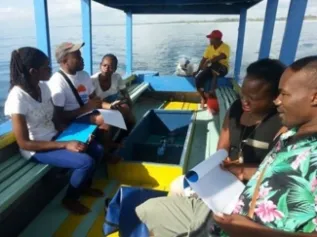
Defining stakeholders and their potential roles
To begin with – It is useful to take stock of the relevant stakeholders in a particular area. The table below summarizes who this might include (adapted from Hoyt, E. A blueprint for dolphin and whale watching development. Humane Society International, 32 (2007). 1):
|
Stakeholder category |
Examples of stakeholders |
Suggested roles in developing and managing whale watching |
|
Small scale tour operators |
These can include fishermen taking tourists out on a part time basis, dive operators, charter fishing boat operators or marine naturalists, and will usually involve businesses of 5 or fewer part- or full time staff and small vessels (e.g. maximum 20 passengers). |
Offering tours, marketing tours, participating in training and capacity building workshops; collaborating with researchers by hosting researchers on board and/or contributing sightings/photo data; contributing to the local community by employing locals, boosting local support businesses. |
|
Medium sized tour operators |
Whale watching fleets, marine tour companies or charter yacht companies –usually employing 5 or more (part and full-time staff) and using vessels of different sizes – ranging from zodiacs to larger specialized whale watching vessels |
Offering tours, marketing tours, participating in training and capacity building workshops; collaborating with researchers by hosting researchers on board and/or contributing sightings/photo data; contributing to the local community by employing locals, boosting local support businesses. |
|
Large and Multinational corporations |
Cruise ship companies that operate live-aboard cruises that may incorporate whale watching (e.g. in Alaska, the Caribbean or the Antarctic). |
Offering tours, marketing tours, collaborating with medium and small tour operators to allow local businesses to benefit from the tourism brought to the region; collaborating with researchers by hosting researchers on board and/or contributing sightings/photo data; |
|
Supporting businesses |
Hotels and resorts where whale watching customers stay, restaurants and snack shops near embarkation points, transportation services to and from the whale watching location (e.g. ferries, charter airlines), boat maintenance providers, souvenir shops and artisans supplying those shops, etc. |
Providing accommodation, food and services to whale watch tourists and operators, and benefitting from additional business generated by whale watching in the community. Raising awareness of whales and dolphins and their conservation needs by promoting whale and dolphin-related products with locals and visitors. |
|
Government Agencies |
Marine park authorities; tourism and marketing boards; state, local or provincial governments; national ministries of tourism/natural resources/environment |
Collaborating with other stakeholders to devise a management strategy; ensuring that strategies have the legal backing to be effective; working with law enforcement agencies and other stakeholders to ensure effective monitoring and collaboration. |
|
Law enforcement agencies |
Park rangers; coastguard; navy; marine police |
Patrolling the areas where whale watching is conducted to monitor compliance with regulations designed to protect tourists and whales and dolphins. |
|
Local or regional residents/stakeholder groups |
Local resident stakeholder groups, national or international (whale and dolphin) conservation NGOs/associations/charities; Tour operators’ associations; dive clubs, etc. |
Representing the interests of the local community and environment, as well as the whales and dolphins, to ensure that whale watching activities do not have a negative impact on the community and local natural resources. |
|
Natural Science Researchers |
Wildlife biologists, ecologists, oceanographers; These can be associated with academic institutions like universities, or NGOs. |
In the early phases of development, researchers can help to conduct baseline surveys on the target whale/dolphin populations, and an environmental impact assessment of whale watching activities. Once the industry is established, they can assist local government and other stakeholders with the continual monitoring of potential impact on target whale or dolphin populations. |
|
Social Science Researchers |
Economists and social scientists studying tourism and communities. These can be associated with academic institutions like universities, or NGOs. |
In the early phases of development, researchers can help to conduct baseline market surveys on the demand and potential market for whale watching. Once the industry is established, they can assist local government and other stakeholders with the continual monitoring of the whale watching industry to measure socio-economic developments and trends in the industry. They can also help to develop educational materials and brochures |
Erich Hoyt and many others strongly encourage the involvement of all these stakeholders (or at least representatives from each of these stakeholder categories) in all aspects of planning and management of a whale watching industry, which are presented in a 14-step plan in the Blueprint for Dolphin and Whale and Watching Development1. This multi-stakeholder collaborative approach was also endorsed during several workshops, including those hosted by the IWC in 20102 and 20133.
Collaboration can be fostered and structured through regular meetings (e.g. at the start and/or end of each whale watching or peak tourist season), capacity building workshops or special events like whale festivals1.
Adaptive management
In addition to participating in the initial design and development of a whale watching industry, all of these stakeholders have a role to play in the adaptive management of the industry over time. Adaptive management is essential in order to take into account changes in the environment, tourism numbers, operator behaviour, or the target whale or dolphin population4-7. A concept that can be helpful in this process is the establishment of Limits of Acceptable Change (LAC)7, where stakeholders collectively decide on measurable limits that would require a change in regulations or management strategies. These limits can be established for biological parameters (e.g. any decline in population numbers, shift in distribution of animals, noticeable health impacts, etc), or socio-economic factors (e.g. exceeded threshold of annual visitor numbers, frequency of infractions of whale watching codes of conduct). The table below summarizes some of the potential costs and impacts or changes that could signal a need to adapt the current management regime, and actions that could be taken to mitigate these costs (see also the section on management strategies and tools for a more detailed description of how these work and which case studies illustrate the use of different tools).
Potential costs of whale watching that would necessitate adaptive management
(Adapted from Hoyt, E. A blueprint for dolphin and whale watching development. Humane Society International, 32 (2007). 1
|
Category of cost |
Examples |
Measures that can be taken to mitigate the cost |
|
Environmental |
E.g. water and air pollution from increased road, air or vessel traffic, increased waste of all kinds from increased human presence in the targeted community |
Ensure that operators are adhering to the best environmental practices with regard to engine maintenance, waste disposal, recycling, etc. |
|
Biological |
E.g. the cumulative impacts of repeated disturbance of the target animals’ critical functions such as resting, feeding and socializing. These can be difficult to measure and require expertise from researchers. Managers may decide to use a precautionary principal if there is even suspicion that a limit of acceptable change has been reached, rather than waiting for measurable proof that a population is declining, or behaviours and energy budgets are significantly impacted. |
|
|
Social |
Local communities may begin to feel ‘overrun’ by tourists, especially if tourism conflicts with local fishing or other marine activities, or strains community services originally designed for local residents only.
Whale watching operators begin to engage in competition or confrontation among themselves, or come into conflict with other marine users. |
|
|
Economic |
While whale watching can generate income for local communities, it also generates costs – such as the creation of additional infrastructure (roads, clinics, hotels, harbours etc) to accommodate the industry and influx of tourists. It may conflict with fishing, and require increased investment in administration and management (e.g. monitoring and enforcement). |
Ensure that a proportion of revenue from whale watching is set aside for investment in public infrastructure (e.g. through tourism taxes), and monitoring and enforcement |
The table above can be used as a very simple guide to conducting cost-benefit analyses on a regular basis. The frequency of reviews could range from yearly to once every five years, depending on how rapidly the industry is developing in a certain area and how closely it is being monitored7. More detailed models to conduct these types of analyses and adaptive management reviews are available in very good articles on management of whale watching by Higham et al. 20095 and Lundquist 20147.
Erich Hoyt has also offered the concept of a ‘Sustainability Report Card’ that stakeholders can use to regularly review and asses their whale watching industry and make necessary adjustments if they come up with an unfavourable score, summarized in the table below1,8:
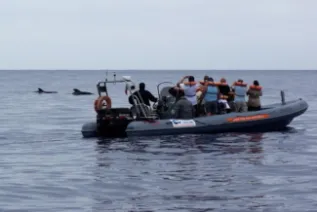
Sustainability report card
(adapted from Hoyt, E. A blueprint for dolphin and whale watching development. Humane Society International, 32 (2007). 1
|
Is the wildlife resource degraded or in the process of degrading? |
|
|
Is the overall environment degraded? |
|
|
Tourist/Industry profile |
|
|
Operators’ profile |
|
Case studies on this site that provide highlight models of stakeholder engagement include those from the Dominican Republic, Patagonia (Argentina), the Whale Trail (Pacific coast of the USA and Canda) and Loreto Bay (Mexico). Case studies that highlight adaptive management include those from Kaikoura (New Zealand), Patagonia (Argentina) and the Samadai Reef (Egypt).The Praia do Forte case study (Brazil) contains a concrete example of how an area can start to work toward determining the carrying capacity of a whale watching site9.