-
Responsible Management
Responsible Management
Explore this section to find information and resources designed to support managers and regulators

-
Preparing for a trip
Preparing for a Trip
Explore this section to find information and resources useful to anyone interested in learning more about responsible whale watching throughout the world
-
Industry support
Industry Support
Explore this section to find information and resources useful to whale watching tour operators and guides or other industry professionals
-
Species information
Species Information
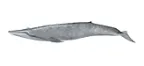
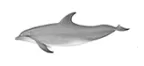
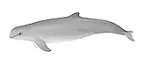
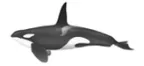
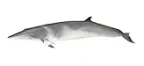
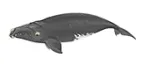
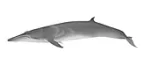
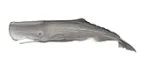
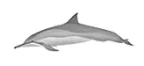
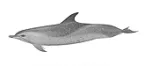
Click on one of the icons to the right to reveal a full description of the species with photos and labeled illustrations useful for species identification, as well as information on biology, ecology and conservation status of each species. Click here to find downloadable PDF fact sheets for each of the species featured on this site.


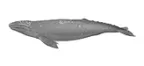
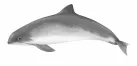
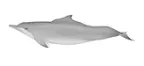
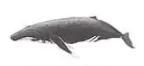



While whale watching is perceived as an activity that can impart economic value to whales and dolphins, and thus provide an incentive to preserve them in their natural habitat, it also has the potential to negatively affect the populations that are targeted for tourism1. It is important for whale watching tour operators and managers responsible for regulating whale watching tourism to understand both the benefits and the potential impacts of this activity. A failure to take measures to minimize or mitigate these impacts could lead to whales and dolphins leaving the area where they are watched and under pressure, or even a significant drop in population numbers due to stress and an inability for the animals to engage in important functions like feeding and resting.
The benefits of whale watching
Whale watching tourism is rapidly growing around the world, estimated to generate over 2 billion US dollars and provide employment for over 13,000 people in 20092,3. A number of coastal communities have been transformed by the introduction of whale watch tourism, such as Kaikoura, New Zealand, where annual visitor numbers rose from 3,400 to an estimated 873,000 over a period of roughly 10 years4-6. Whale watching also makes significant and long-term contributions to employment and the economy in Scotland7-9, and many other coastal communities around the world where whale watching is growing more rapidly than other forms of tourism2,10. In these communities, the income and jobs generated by whale watching can foster a sense of pride and stewardship for the whales and dolphins upon which the local economy depends7.
In addition to generating income and employment in coastal communities, responsible whale watching that includes an educational element has the potential to foster an appreciation for wildlife in its natural habitat and raise awareness of whale and dolphin conservation needs among participating tourists11-15. These inspired tourists may become active proponents of environmental and conservation actions16,17.
Whale watching vessels can also serve as valuable platforms of opportunity for the collection of data on whale or dolphin distribution, habitat use, and long-term photo-identification studies18,19. Long-term partnerships between whale watch tour operators and researchers in the Gulf of Maine have resulted in the publication of over 75 peer-reviewed scientific papers that include the use of data collected on board whale watching vessels. The hosting of whale researchers on live-aboard eco-tours in the Antarctic provides researchers with cost-effective access to an extremely remote area where they can conduct valuable studies on whales and their habitat.
While the benefits of responsible whale watching are substantial and varied, these need to be weighed against the potential effects of whale watching in order to ensure that negative impacts can be mitigated by active management measures.
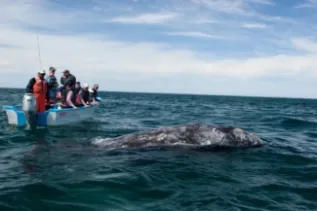
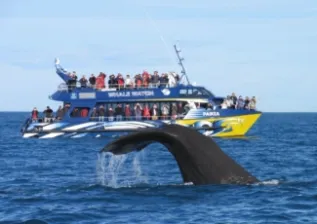
The potential impacts of whale watching
The ecological effects of whale watching on whales and dolphins are well summarized by Parsons1, as well as Constantine20, New et al.21 and Christiansen and Lusseau22, who divide the potential impacts of whale watching into short-term, long-term, and non-visible effects:
Short-term effects include changes in (swimming) behaviour in the presence of a whale watching boat, such as deeper and more frequent dives, presumably to avoid the vessel(s)23,24; or fast changes in direction, presumably to try and outmanoeuvre or confuse whale watching boats25-27. These avoidance behaviours may result from the whales’ or dolphins’ perception of whale watching vessels as potential predators22,28, and how strongly they react is affected by the distance of the vessel, with stronger responses when the vessel is closer24,29. One study found that killer whales increased their swimming speed when boats were within 400m of them30, and another found that this happened within 100m25. The frequency and strength of animals’ responses can also change with the number of vessels present, with a higher number of boats causing stronger responses31,32.
Whether these short-term behavioural changes have long-term impacts to individual whales or dolphins or to whole populations will depend on how frequently the same group of animals are exposed to whale watching activities33, and which of their natural behaviours are interrupted at the time the whale watching encounter occurs22. Whales or dolphins that are repeatedly interrupted during important activities like feeding or resting may suffer more “energetic costs” over time than animals that are in transit, or socializing34.
Long-term effects are more difficult to measure because whales and dolphins are long-lived (20 to over 100 years, depending on the species), and typically only have one calf every 1-5 years (again – varying by species). As such, measuring long-term impacts can only occur in populations that have been studied before whale watching began in order to provide a “baseline” of pre-tourism population numbers, behaviour and distribution. These populations then need to be monitored over a period of many years before significant changes in distribution or population numbers can be detected. But where these effects have been monitored, whale watching activities have been linked to a decrease in population size 33, or a movement of animals away from the area targeted for tourism35. A series of studies in the Bay of Islands, New Zealand, clearly documented avoidance of vessels and swimmers by bottlenose dolphins36, and a subsequent 7.5% annual decrease in population numbers37, for which other possible causes (such as by-catch in fishing gear and environmental variables) were ruled out20. One study in Australia found that dolphins’ responses to vessels became stronger over time, with sightings success for dolphin-watching operations decreasing over the years38. However, other modelling studies indicate that the potential disruption to minke whale feeding opportunities caused by whale watching is unlikely to have a measurable impact on a female’s reproductive success over time39. Similarly, studies indicate that humpback whales in the Gulf of Maine have not suffered any negative population-level impacts from the whale watching to which they have been exposed over the years40.
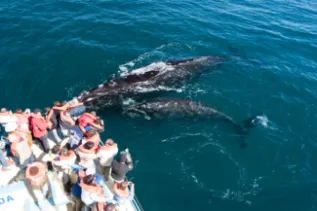
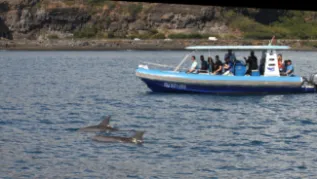
Non-visible effects are also very difficult to monitor, particularly in wild populations. However, they include increased levels of the stress hormones cortisol and aldosterone, which were measured in dolphins that were encircled by capture nets 41. Prolonged or cumulative stress is known to be linked to disease and lower rates of survival in marine mammals42, and as such should not be taken lightly.
The noise from boat engines also has the potential to mask communication between whales and dolphins, or to force them to vocalize more loudly and more frequently43,44. A study that modelled the effects of vessel noise on killer whales indicated that 30-50 minutes of exposure to vessel noise at a distance of up to 450m could cause a temporary shift in hearing threshold, and that prolonged exposure to the superimposed sounds of several boats that many whales endure was likely to cause permanent shifts in hearing. This is potentially devastating for a species that relies heavily on sound and echolocation for both feeding and maintaining social bonds. The disruption of communication and hearing is likely to affect the most vulnerable members of groups, such as dependent calves and their mothers43,45.
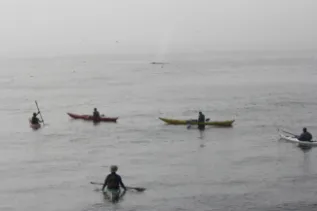
The potential severity of impacts from whale watching will vary between different species, geographical locations, and the group composition of the whales or dolphins being watched46. Mothers and calves are the most vulnerable to almost all of the potential negative impacts, as calves are limited in speed and mobility and are dependent on their mothers for nourishment and protection29,31. At sites where the whales or dolphins targeted for tourism have no alternative locations for important biological functions like feeding or resting, animals may be at greater risk of serious “energetic costs”, by being distracted from these behaviours, as well as increased stress levels from the continual presence of vessels20. Understanding that whales’ and dolphins’ responses to vessels may be triggered by their instinctive response to predators explains why their response to quiet, non-motorized vessels like kayaks can be just as strong as their response to powerboats47, even if kayaks and canoes do not create underwater noise and risk of hearing damage. Other studies have confirmed that boat presence, not just noise, has the potential to impact dolphins and distract them from important activities like feeding48.
A variety of management measures and regulations can be considered to minimize the impact that whale watching activities can have on the animals they target. These regulations can be tailored to the species, geographical area, and types of vessels involved. The International Whaling Commission and the Convention for Migratory Species have agreed on a set of general principles for whale watching. These include the suggestion that regulations should be based on scientific research, where it is available, to indicate the approach distances, number and type of vessels, and number of tours/hours per day that can be considered “safe” in that they would carry a lower risk of long-term negative consequences for individual whales or dolphins, or for the targeted population as a whole. A table summarizing many (but not all) of the studies that have been conducted on the potential impact of whale and dolphin watching can be found here.