

-
Responsible Management
Responsible Management
Explore this section to find information and resources designed to support managers and regulators
-
Preparing for a trip
Preparing for a Trip
Explore this section to find information and resources useful to anyone interested in learning more about responsible whale watching throughout the world
-
Industry support
Industry Support
Explore this section to find information and resources useful to whale watching tour operators and guides or other industry professionals
-
Species information
Species Information
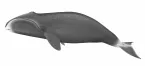
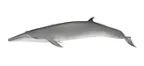
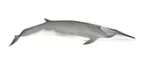
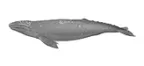
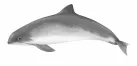
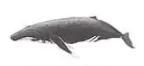
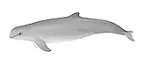
Click on one of the icons to the right to reveal a full description of the species with photos and labeled illustrations useful for species identification, as well as information on biology, ecology and conservation status of each species. Click here to find downloadable PDF fact sheets for each of the species featured on this site.












History and context
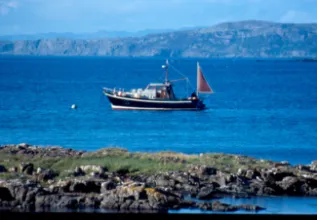
The first commercial whale watching trips in Scotland were offered from the Isle of Mull in 19891, and the industry took off from that point, growing at an average rate of 8.5% per year, and doubling during the period between 1998 and 20082. As of 2008 the industry in Scotland was represented by 51 tour operators, of which 46 offered boat-based tours, and 5 focused on shore-based whale watching. Whale watching in Scotland attracted approximately 224,000 whale watchers per year, with an estimated direct revenue from whale watching activities of almost 5 million USD, and indirect revenue (for hotels and restaurants and other tourism related services) of roughly 13 million USD2. 55-60% of this tourism takes place form the picturesque west coast of Scotland and the constellation of islands known as the Hebrides, while a slightly smaller percentage is based in the Moray Firth and Inverness on the northeast coast. While the majority of tours are advertised as general marine wildlife tours, twelve operators offered exclusively whale and dolphin targeted tours, which focus on bottlenose dolphins, minke whales and harbor porpoises2. In 2015 a study focusing on West Scotland alone estimated that 51,200 people went whale-watching on boats in the west of Scotland generating roughly 6 million GBP of combined direct and indirect revenue3. This study found that while the total number of whale-watching passengers in West Scotland declined by 17.3 % between 2000 and 2015.3
Against this ‘big picture’ of whale watching in Scotland, several studies have been conducted to better understand the socio-economic impacts of whale watching in Scotland and the nature of the tourists taking part in this activity4. A 2003 study determined that 23 % of the whale watchers interviewed in rural west Scotland had come to the area specifically for whale watching5. Studies also showed that whale watchers were likely to stay in the area longer and contribute more to the economy than they would have if whale watching had not been on offer5,6. Scottish whale watching tourists were generally middle class, middle-aged, well educated,5 and more environmentally aware and active than the general public in Britain7. Many of them classified themselves as ‘dolphin enthusiasts’ and indicated a strong interest in either returning to the same area or visiting other dolphin watching areas in Britain if given the knowledge and opportunity6. Overall, awareness and perceptions of whale watching among the general public in Scotland (Glasgow and Edenborough) were fairly high and very positive, with 60% of those interviewed indicating that they would like to participate in a whale watching trip, even though only 7% had done so in the past8.
A fair amount of research has also been conducted on the tour operators offering whale watching and general marine wildlife tours in Scotland. Whale watching tour operators were mostly local to the coastal communities where their tours were offered. Many were ex-fishermen and most did not have any formal training in business management or wildlife guiding9. These operators generally provided employment for up to five full time equivalent positions each, and as such were actively contributing to local employment numbers9 as well as the local economy through direct and indirect/related revenue from whale watching. A more recent study of 22 whale watch tour operators in West Scotland revealed that over half of the operators (54 %) had been conducting whale-watching for greater than 10 years, suggesting it is providing a reliable and sustainable source of employment3. In addition to their contributions to the economy and employment, whale watch operators were documented to contribute to local communities in other less quantifiable, but very tangible ways: some collect contributions from tourists for local charities; others offer free tours to local school groups and small businesses at the end of the season; and some staff members from whale watch operators use their seafaring and first aid skills to contribute to community services such as the lifeboat crew and the fire brigade4.
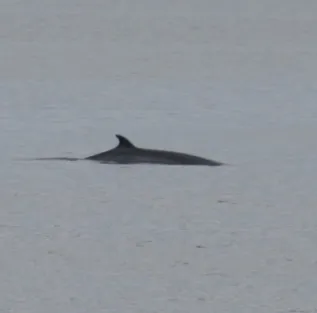
In addition to the benefits that whale watching provides to local communities in Scotland, it has also contributed to scientific understanding of whale and dolphin distribution, habitat preference, and behavior through the use of whale watching vessels as platforms of opportunity for data collection. Tour operators who collected data themselves, or allowed graduate students to join their tours to collect data on whale or dolphin behavior, facilitated the publication of at least three papers in respected scientific journals that allow the international research community to better understand the distribution and behavior of minke whales off the west coast of Scotland10-12. What is learned from whale watch tours and researchers is often shared with the general public through interpretive guides on tours, information and displays at visitors’ centers and dedicated outreach and education programmes run by NGO’s, such as the Hebridean Whale and Dolphin Trust, and the Scottish Dolphin Centre.
These factors all indicate that whale watching has a very positive socioeconomic impact in Scotland, and that it has the potential to further expand and provide wider benefits to more tourists and coastal communities in the future.

Regulatory measures
A number of legal measures protect whales and dolphins in the UK and Scotland. For example, in the UK all cetaceans are protected under the Wildlife and Countryside Act 1981 which was amended on various occasions, including the Nature Conservation (Scotland) Act 2004.
Regionally, the UK is a Party to the Agreement on the Conservation of Small Cetaceans of the Baltic and North Seas (ASCOBANS) which requires signatory states to work towards the prevention of significant disturbance to cetaceans, especially that of an acoustic nature. On a Europe-wide level, all cetaceans are listed under Annex IV of have been protected under the EC Habitats and Species Directive (92/43/EEC) as species in need of strict protection. Under this legislation, it is an offence to deliberately disturb cetaceans. Furthermore, member nations are obligated to designate protected areas for species listed on Annex II (which includes harbor porpoises and bottlenose dolphins), giving rise to the designation of the Moray Firth as a Special Area of Conservation (SAC). How this directive will apply to UK wildlife following Brexit is still unknown.
Of all regions in Britain, Scotland has some of the most specific and recently updated measures protecting marine mammals and regulating whale watching activities. The Nature (Scotland) Act in 2004 introduced a nationwide set of marine wildlife guidelines which serve as a minimum standard for whale watching and other activities. These guidelines were produced with input from operators as well as conservation scientists, to increase “operator ownership”. The Scottish Marine Wildlife Watching Code was reviewed and updated in 2017 and includes new more specific guidance on watching marine wildlife. The new code can be downloaded here, and provides detailed advice on how to safely approach whales and dolphins with minimum risk of disturbance.
Operators can also refer to stricter and more protective guidelines that are not government mandated. One such set of guidelines specifically targeted toward marine mammals, the WiSE scheme, which provides a standard for commercial marine wildlife watching. WiSE seeks to minimise unintentional disturbance of marine wildlife through:
- Delivering training and accreditation to operators of registered passenger and charter vessels who wish to view marine wildlife;
- Working with operators and support boats that may interact with marine wildlife; and
- Liasing with key organisations to offer advice and guidance for the general public.
However, WiSE accreditation is not compulsory and there are regular reports of vessels getting too close to animals, crowding whales or dophins with too many vessels and/or and exceeding recommended speed limits. This is particularly the case with private boat owners who are often not as well informed as tour operators and do not adhere to guidelines13.
Even amongst tour operators, awareness, understanding of, and compliance with guidelines and regulations is not always very high. A 2003 study found that most operators at that time were either unaware of, or less likely to comply with governmentally designed regulations than codes of conduct agreed amongst themselves or provided by local NGOs14. The process of developing the Scottish marine wildlife code included a strong element of consultation between the government and stakeholders, including whale and dolphin watch tour operators15, as such the new guidelines are being used, but a recent study found that operators still have a tendency to refer to locally produced guidelines13. These guidelines all adhere to the same common core principals, but differ in details such as recommended approach distances for different species of marine mammal, and these discrepancies can lead to potential misunderstanding or friction between operators and enforcement agencies13.
Lessons learned:
Whale watching in Scotland has developed fairly rapidly over the past 30 years, and appears to be sustainably generating revenue and a wider range of positive socio-economic benefits for coastal communities in Scotland. Strengths of the industry as it has developed in Scotland include:
- A tendency toward locally owned and operated tour companies that provide sustainable employment and revenue for local communities9;
- An emphasis on ‘giving back’ to the communities in which operators are based, through community outreach and the involvement of school children and volunteers;
- A partnership with research and conservation organisations, contributing to scientific studies and in depth understanding of whales and dolphins and their conservation needs;
- An understanding of the economic, cultural and conservation importance of whales, dolphins and other marine life in local coastal communities and the tourism industry;
- Local operator engagement in local grassroots conservation and marine education.
While on the whole the development of the industry has been positive, there are a number of concerns that need to be addressed to ensure that the industry is sustainable from an environmental and biological point of view as well as a socioeconomic point of view:
- There is concern that whale watching may not be generating as many benefits for the animals as it does for the humans who watch them. While a wealth of socio-economic research has been conducted, research on the potential impacts of boat-based whale watching on cetaceans in UK waters has been limited. One 2003 study found that dolphins were more likely to synchronise their diving and breathing in the presence of boats16, and a 2005 study of bottlenose dolphins around Aberdeen showed that while dolphins showed mixed reactions to boats moving slowly or at intermediate speeds, they showed negative reactions to boats traveling at high speeds 17. While the dolphins in this study seemed to show some level of habituation to moderate vessel presence, on a few occasions during periods of intense and prolonged vessel traffic they were observed to vacate the area entirely17.
- Earlier studies showed that whale watch operators, as well as tourists, had a fairly low level of awareness of government-issued approach guidelines14, and that tourists generally did not consider whale watching as a potential threat to whales or dolphins8. The new Scottish Marine Wildlife Watching Code is being well advertised and distributed through social media and other channels. Hopefully it will help to address this lack of awareness and compliance.
- There is a need for research to describe and monitor the potential impact of tourism on whales and dolphins through shore- or vessel-based studies that measure changes in dolphins’ behaviour in the presence of vessels as well as rates of compliance with new guidelines and regulations13. Only when this type of research has been conducted will it be possible to determine whether whale watching in Scotland is truly sustainable for the whales as well as the people watching them.