-
Responsible Management
Responsible Management
Explore this section to find information and resources designed to support managers and regulators

-
Preparing for a trip
Preparing for a Trip
Explore this section to find information and resources useful to anyone interested in learning more about responsible whale watching throughout the world
-
Industry support
Industry Support
Explore this section to find information and resources useful to whale watching tour operators and guides or other industry professionals
-
Species information
Species Information
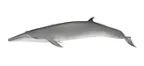
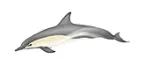
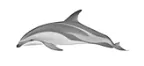
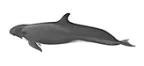
Click on one of the icons to the right to reveal a full description of the species with photos and labeled illustrations useful for species identification, as well as information on biology, ecology and conservation status of each species. Click here to find downloadable PDF fact sheets for each of the species featured on this site.


History and context
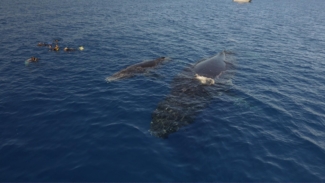
The Kingdom of Tonga is a small island nation in the middle of the South Pacific. In 2006 its estimated population of 100,000 people was spread out over 36 inhabited islands, with two thirds concentrated on the main island of Tongatapu1. Although the country has many agricultural exports, from the 1990’s onward, tourism has become an increasingly important source of income, estimated to account for 15% of the economy in 20061. In 1994, this tourism included two operators who took tourists to see, and sometimes swim with humpback whales that feed in Antarctica, and come to the tropical protected reefs and Atolls around Tonga and other South Pacific islands to mate, give birth and nurse their calves. By 2008, this number had increased to 14 operators, involving over 3,000 individual tourists in whale watching tours each year2 – with most tourists engaging in multiple whale watching tours during a single visit - an average of three tours per visit1. The industry was estimated to generate a combined direct and indirect income of just over 2 million USD for Tonga in 20082.
The humpback whales visiting Tonga are part of the Oceana breeding stock, designated breeding stocks E and F by the International Whaling Commission3. This population feeds in Antarctic Area IV during the Southern Hemisphere summer, and breeds in Tonga, New Caledonia, Fiji, Samoa and Niue during the Southern hemisphere winter, from July to October. Following intensive whaling in the Antarctic, this population was estimated to number as few as 250 whales in 1964 and is now estimated to be in the low thousands4 with limited exchange between the different islands of the region5. The population is still designated as Endangered by on the IUCN Red List of Threatened Species6.
Today there are between 35 and 50 licensed whale watching vessels in Tonga. Of these, roughly 20% are completely Tongan owned, but many included foreign managers or owners7. The majority of operators are on the island of Vava’u which has an international airport and is the centre of whale watch tourism, but a smaller number of operators offer tours from Tongatapu, ‘Eua and Ha’apai.
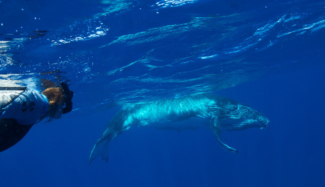
Vessels are generally smaller than 10m in length and target the sheltered waters on leeward sides of islands where they can offer guests the opportunity to enter the water and swim with whales in calm, sheltered waters. Swimmers enter the water in groups of no more than four, accompanied by a snorkeling guide. The preference of tours for these sheltered areas, results in the frequent targeting of mother whales with their calves, which also make use of the calm waters for nursing, particularly toward the end of the season7.
Although the whale watching industry grew at a rate of just over 15% per year between 1998 and 20082, a number of factors are considered to limit the potential for further growth1. These include the limited capacity for air travel to the remote island nation, the limited number of hotel beds on the islands, and, perhaps most importantly, concern for the impact that the industry could have on this endangered population of whales1.
Regulations and management measures
Tonga is a constitutional Monarchy, and a royal decree in 1978 banned whaling and protected all marine mammals from direct hunting. The Tongan Fisheries Conservation and Management Act 1993 offered further protections to marine mammals, but did not include any specific measures to regulate whale watching7. The Tourism Act of 1977 allowed the government to implement a permitting system in the 1990’s that limited the number of operators that could engage in whale watching each year. As of 2010 this was limited to 19 permits, with an allowance of two vessels per permit7. By 2017 this had increased to 28 licensed vessels in Vava’u and approximately 7 in Ha’apai and 6 or 7 in Nuku’alofa.
In 1998 the Tongan Government, the South Pacific Regional Environment Program (SPREP) and Whales Alive collaborated to draft guidelines for whale watching, which were unofficially followed by some operators, and adapted by the Tongan Whale Watching Operators Association to form their own Industry guidelines in 2001. For many years, these were the only guidelines in place, as subsequent draft guidelines produced for the government in 2003 and 2005 failed to be formally ratified and implemented7.
In 2008 the Whale watching and Swimming Act formalized the license application process, creating two separate categories of permits for boat-based whale watching and for in-water interactions with the whales and formally designating the Ministry of Tourism as the authority responsible for management of whale watching7. In 2013 a comprehensive set of guidelines was formally ratified by the government, recognizing the Ministry of Tourism the authority to issue licenses, to limit the number of licenses issued each year, and to only issue licenses to those operators that can fulfil certain conditions, including: proof that the intended activities will not harm or jeopardize the whales; proof that the operator and its staff have sufficient knowledge and understanding of the whales and their conservation needs; and proof that the operator and its staff have the “required skills and knowledge to provide valued services to customers” (Ministry of Tourism, 2013).
The guidelines set forth clear approach guidelines for boat, helicopter and air-based whale watching as well as in-water interactions. Some of the key stipulations of the guidelines applicable to swimming with whale include:
- Only licensed whale watching providers are allowed to approach whales to within distances of less than 300m, and only swimming providers are permitted to put swimmers in the water with whales;
- No more than four clients plus one trained local guide per certified vessel may be in the water with any one pod of whales at a time;
- Only one certified vessel under license may put swimmers in the water with any one pod of whales;
- Each licensed service provider is solely responsible for determining whether the conditions for clients to swim with whales are safe;
- Vessels with swimmers in the water shall fly the a special flag provided with their permit;
- If a second service provider arrives, the approaching vessel shall make contact by VHF radio (Channel 74 – low power) and stay outside 100 metres;
- No swimmer shall approach any whale closer than 5 metres and no vessel shall approach any whale closer than 10 metres for the purposes of dropping off or picking up any swimmer except in an emergency where the safety of a swimmer is at risk.
- no person shall make any loud or disturbing noise near whales;
- no person shall use Self Contained Underwater Breathing Apparatus (SCUBA) for diving or swimming with whales or use artificial light sources around whales;
The guidelines also include a clear description of the penalties for infractions – ranging from 1,000-5,000 USD for individuals to 10,000-20,000 for operators. In 2017, inspections on licenses and guide permits were monitored through Ministry of Tourism and on the water operator behavior were monitored through Ministry of Police. The Whale Watching and Swimming Regulations, 2013 are currently under review and stakeholder consultations.

Lessons learned
The whale watching industry in Tonga is one that is often highlighted in literature as an example of how whale watching tourism can bring benefits to local communities. It is true that many tourists choose Tonga as a holiday destination primarily because of the unique opportunity it offers to have in-water interactions with whales in clear tropical waters that are generally sheltered and calm and safe for open-water swimming7. However, stakeholders in Tonga, as well as international researchers are well aware of the importance of balancing tourists’ expectations and wishes and local economic benefits with the welfare of the endangered whale population targeted by the industry.
Challenges to date have included:
- Research conducted in 2009 and 2010 attempted to assess the likelihood that the same individual whales would repeatedly be exposed to whale-watching or swim-with whale operations in Tonga. They determined that whales were not likely to be sighted in the same area for more than three days in a row, and that therefore their exposure to the whale watching activity was likely to be brief. None-the-less, they urge caution – particularly as mothers and calves are most frequently targeted for swim-with-whale operations, and repeated disturbance to their essential nursing activity could render calves less fit for the migration back to Antarctic feeding grounds8. The 2013 regulations provide some extra protection for mothers and calves by determining that they should be off-limits to any whale-watching activities after one provider has spent the maximum of 90 minutes viewing/interacting with them.
- Research conducted in 2009 and 2010 provided some insights into practices that were more or less likely to elicit behaviour changes in the whales. The study determined that any boat approaches closer than 30m resulted in a significant increase in whale surface activity and advised that vessels dropping swimmers with whales do so from a greater distance. The study also determined that splashing swimmers elicited a stronger reaction than ‘quiet simmers’9. The 2013 regulations stipulate a need to refrain from loud noise around the whales, but still allow vessels to approach to within 10m to drop swimmers and do not contain any language to prohibit/minimize splashing.
- In 2017, the government of Tonga and SPREP hosted the Whales in a Changing Ocean conference, bringing scientists, conservation groups and operators together to discuss the wide range of topics on marine mammals including climate change, entanglements and whale watch operations. The conference helped local participants to appreciate the high value placed globally on Tonga’s whales, and Tongan operators held workshops and side meetings to discuss ways to strengthen whale watch and swim with operations and improve upon conservation strategies through tourism.
- Currently, the majority of the whale watching companies were founded and continue to operate through foreign investment. This may be partially due to financial limitations and cultural practices of local tourism operations, but there is a desire to foster more Tongan owned and operated businesses that will hopefully feel an even greater sense of stewardship for the resources upon which their business depends.
- There has been discussion of creating a network of no-interaction areas that are critical habitats to the mother and calf pairs. These areas could provide refuges for mothers and calves, and could also serve as controls for future studies that could compare the relative abundance and behaviour of whales in areas not affected by tourism with those areas that are.
- Managers and local NGOs have also discussed the possible reduction of the number of whale watching licenses as a means of controlling the number of vessels and swimmers interacting with whales. A reduction in the number of boat permits could be compensated by the use of (slightly) larger vessels with the capacity to take more tourists for boat-based whale-watching activities8,9.
Recommendations and indications of improved management include:
- In 2017, the government of Tonga and SPREP hosted the Whales in a Changing Ocean conference, bringing scientists, conservation groups and operators together to discuss the wide range of topics on marine mammals including climate change, entanglements and whale watch operations. The conference helped local participants to appreciate the high value placed globally on Tonga’s whales, and Tongan operators held workshops and side meetings to discuss ways to strengthen whale watch and swim with operations and improve upon conservation strategies through tourism.
- Currently, the majority of the whale watching companies were founded and continue to operate through foreign investment. This may be partially due to financial limitations and cultural practices of local tourism operations, but there is a desire to foster more Tongan owned and operated businesses that will hopefully feel an even greater sense of stewardship for the resources upon which their business depends.
- There has been discussion of creating a network of no-interaction areas that are critical habitats to the mother and calf pairs. These areas could provide refuges for mothers and calves, and could also serve as controls for future studies that could compare the relative abundance and behaviour of whales in areas not affected by tourism with those areas that are.
- Managers and local NGOs have also discussed the possible reduction of the number of whale watching licenses as a means of controlling the number of vessels and swimmers interacting with whales. A reduction in the number of boat permits could be compensated by the use of (slightly) larger vessels with the capacity to take more tourists for boat-based whale-watching activities8,9.
Since this case study was published - new developments can be found on the following links:
- News that Tonga has placed a cap on the number of whale watching licenses that are awarded annually: https://matangitonga.to/2020/02/26/tonga-limits-whale-watching-licences?fbclid=IwAR3pM5X8wR80qUzQAlb3QPgnVl9FZOIT9LTQdkDjzi4SIGCsIM-KY2T7Iqw and https://www.rnz.co.nz/international/pacific-news/410468/tonga-curtails-licensing-for-whale-watching-tour-operators