-
Responsible Management
Responsible Management
Explore this section to find information and resources designed to support managers and regulators

-
Preparing for a trip
Preparing for a Trip
Explore this section to find information and resources useful to anyone interested in learning more about responsible whale watching throughout the world
-
Industry support
Industry Support
Explore this section to find information and resources useful to whale watching tour operators and guides or other industry professionals
-
Species information
Species Information
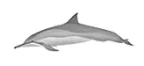
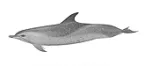
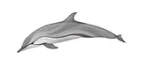
Click on one of the icons to the right to reveal a full description of the species with photos and labeled illustrations useful for species identification, as well as information on biology, ecology and conservation status of each species. Click here to find downloadable PDF fact sheets for each of the species featured on this site.


Enforcing whale watching regulations Anecdotes and practical tips from enforcement officers at opposite ends of the world
History and context
One theme that has repeatedly arisen from other case studies featured on this site is the need for effective legally enforceable regulations to manage whale watching activities. The table of guidelines and regulations featured on this site provides multiple examples of regulations that different countries or local regulatory bodies have put in place. These regulations are often the product of multiple phases of planning and discussion between the competent authorities and other stakeholders, including scientists, NGOs, local communities, and commercial whale watching operators or associations. However, it is also important to consider the roles of enforcement agencies in implementing regulations and ensuring that they are effective in practice as well as on paper. While the section of this website focusing on monitoring and enforcement summarizes some of the methods that can be used to ensure compliance with regulations, this case study highlights the practicalities of enforcement operations with the aim of helping managers design regulations that are truly practical and feasible to implement.
This case study is based on interviews with two enforcement officers who have conducted whale watching compliance operations in two completely different regions – Hawaii and Australia. Despite the different contexts, they have surprisingly similar stories and lessons to share. As enforcement officers they have been involved in three main categories of enforcement activities:
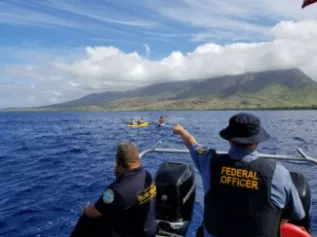
- Overt surveillance in a marked vessel that operators and the general public recognize: This generally acts as a deterrent, as operators who see the enforcement vessel are likely to make sure they comply with regulations while in view, rather than risking a fine or other consequence.
- Covert surveillance usually conducted by an officer who boards a whale watching vessel as a fee-paying tourist, and uses the opportunity to collect information on the operator’s compliance with regulations. These are generally more effective as a means to monitor true rates of compliance with guidelines and determine whether regulations are being successfully implemented.
- Prosecution of infractions reported by third parties: In such cases, an interested stakeholder (e.g. another operator, a recreational boater or member of the public) may have filed a complaint or provided evidence of an infraction, which the competent authority must investigate, and if possible bring to trial.
Below we share a few examples and tips from the field, along with some lessons learned and recommendations for all those involved with management of whale watching and monitoring and enforcement of regulations.
Stories and tips from the field
Incident in the Hawaiian Islands Humpback Whale National Marine Sanctuary - the trajectory from complaints to prosecution:
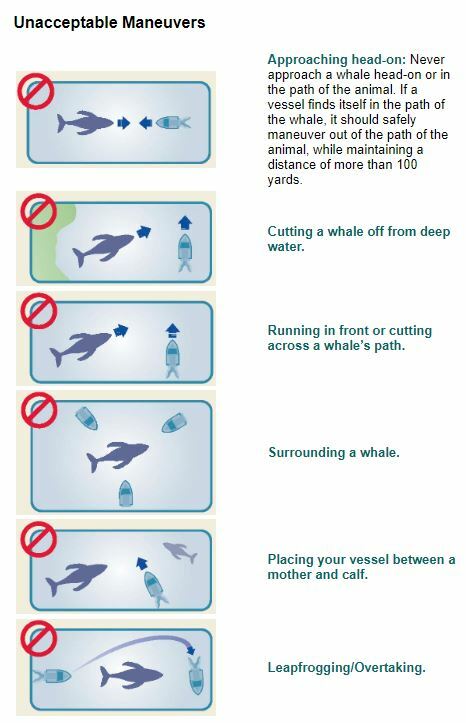
On multiple occasions from January through February of 2009, the National Oceanic and Atmospheric Administration (NOAA) Office of Law Enforcement (OLE) received several complaints regarding a commercial whale watching vessel operating out of Lahaina Harbor in Maui. The captain of the vessel would often aggressively approach humpback whales within 100 yards, which is the minimum approach distance stipulated in the regulations listed here: https://hawaiihumpbackwhale.noaa.gov/management/legislation.html#hihwnms
Despite repeated warnings by other witnesses, some of which were other commercial whale watch tour operators, this individual continued this behaviour. These violations were allegedly conducted off the west coast of Maui within the Hawaiian Island Humpback Whale Sanctuary (HIHWS). Several witnesses on different occasions, voluntarily provided statements of the illegal approach incidents by this captain. These witnesses were operating commercial whale watching charters with passengers on board during these observations. Some of these witnesses provided evidence containing photographs and videos. The captain of the suspect vessel was previously interviewed in 2008 by NOAA OLE special agents and acknowledged that he was well aware of the 100 yard approach rule for humpback whales within the Sanctuary.
The challenge in this case was the difficulty in proving this illegal behaviour, as this individual was very careful not to violate approach regulations when marked patrol vessels were in the area. Evidence obtained from complainants, such as photos, videos and witness statements, were not deemed strong enough to obtain a successful prosecution.
To address this challenge NOAA OLE initiated a special undercover operation. During this operation, undercover agents were able to purchase tickets as passengers on the suspect vessel during commercial whale watching tours off the west coast of Maui within the HIHWS. During these whale watching tours, the special agents were able to obtain evidence of egregious violations approaching humpback whales within 100 yards within the HIHWS.
Once the investigation was complete, the case package was submitted to NOAA’s Office of General Counsel Enforcement Section (GCES). GCES issued a Notice of Violation and Assessment (NOVA) for multiple counts in the amount of $50,000.00 against the captain and owner of the vessel. The case was ultimately settled in federal court on Maui where the owner and operator agreed to pay a civil penalty of $30,000.
Incident in New South Wales, Australia: Harassment of a humpback whale by a jet skier
(sourced from a newspaper article with support from the enforcement officers involved in the case)
In August 2004, a jet skier was observed encircling a humpback whale at high speed for 15 minutes, approaching to within 70 metres of the whale on several occasions. This behaviour took place off of Cape Byron, and was clearly in breach of the 300m approach rule that was in place under National Parks and Wildlife Service (NPWS) regulations. The incident was witnessed by a Cape Byron Headland Reserve volunteer and around 30 tourists who were whale-watching from the lighthouse. The volunteer alerted Cap Byron rangers, and a coastguard volunteer was asked to rack the jet ski and driver who were later intercepted at the nearest boat ramp when he returned to shore. Although the driver initially did not admit to harassing the whale, he admitted to having been in the area with his jet ski, and witness observations and coast guard data were sufficient to prove that his was the only jet ski operating in the area at that time, and that his actions were clearly in breach of regulations.
The offender was taken to court, where a written expert statement by a globally renowned humpback whale expert supported the prosecution with information about the impacts of such reckless behaviour on humpback whales in general – including disruption of normal behaviour and heightened stress levels. The expert was also able to interpret the observed behaviour of the whale that was being encircled, to demonstrate how it was indicative of a stress response and attempts to flee the disturbance. Together this expert opinion and strong witness statements, ensured that the court case ended in a successful prosecution and a 500 Australian Dollar fine. The court case was highly publicized and used as a warning to other marine users in the area.
Tips: Anyone conducting surveillance activities needs to be equipped with the tools that will allow them to document any infractions that are observed. In the case of covert operations, consideration should be given to the size and conspicuousness of items that are used. These can include:
- A GPS unit set to record track data at an interval that will allow accurate interpretation of the vessel’s location, speed, and movements of the vessel around the animals supporting visual observations (especially if the officer is on the whale watching vessel);
- A camera with video and audio capabilities to document a vessel’s interaction with cetaceans (ideally more than a smartphone);
- A rangefinder that can measure the vessel’s distance to shore, a navigation aid or another vessel. This technique can be useful in estimating the distance to the whale when the whale is between the observer and the acquired target. Note that a range finder is not practical to measure distances to fast moving whales or small cetaceans, and that it is important for the officer to have other methods to estimate distances to animals as accurately as possible (e.g. comparing the boat length to the distance to the animal);
- A mobile phone or tablet can be used for note taking (less conspicuously than a notepad and paper or clipboard).
- The GPS will record the official time, as it is synced with satellites. Cameras and other devices should be synched as closely as possible with the GPS to ensure that any video or photos collected can be matched precisely to the GPS track and location.
Lessons learned and recommendations for the future
The stories from the field in Hawaii and Australia illustrate a few elements that can be applicable to enforcement of whale watching regulations throughout the world.
- Collaboration: Even in protected areas, effective enforcement requires good collaboration between multiple bodies, which may include local, state or federal authorities, park management bodies, and Coast Guard, Marine Law Enforcement or Navy personnel with the mandate to conduct surveillance and enforcement activities. The constellation of stakeholders may vary from one country to another, but the most important factor is to ensuring those who design regulations and the consequences for non-compliance consult closely during their development with those who will be responsible for monitoring compliance and issuing warnings, fines, suspensions, etc.
- Clear boundaries: Enforcing regulations is easier to do in well-defined areas, such as sanctuaries or national parks where clear regulations are in force, and there is a clear management structure that can commission enforcement officers with the mandate to conduct overt or covert surveillance and issue warnings, fines, or summons. Keeping the boundaries of these areas well marked or easy to interpret is also important. This will help users (and enforcement officers) clearly understand when they are inside or outside of an area where regulations are applicable. For example, straight lines/boxes defining areas or from one headland to another that delineate the boundaries of a bay are easier to interpret than boundaries that follow a depth contour. While the latter may make sense from an ecological perspective, it is very difficult for users to interpret.
- Evidence is critical: Infractions must be well documented with proof of the vessel’s exact position and behaviour in relation to the whales/dolphins and the conditions that classify the interaction as an infraction (the angle or speed of approach, the distance to the whales, the presence of swimmers in the water, presence of other vessels before the non-compliant vessel arrived exceeding vessel limits, etc.). Where and when possible the entire interaction should be videoed from start to finish, with uninterrupted video capturing the vessel’s approach to the animal through to its departure. If positioned on the vessel, the person collecting evidence should include regular scans between the animals and specific aspects of the vessel, including the skipper at the helm (steering and throttle controls), the stern (angle of the outboards, prop wash and wake) and angle of the bow relevant to fixed markers. By using these as indicators during an interaction, proof can be obtained to demonstrate the deliberate and intentional operation of the vessel by the skipper and/or his/her carelessness with regard to the vessels status. In addition, any photos of the alleged violation should clearly depict the whale or dolphin species in question, and the animal’s activity before, during and after the approach. Photos, or preferably video, should be accompanied by a solid reliable witness statement, and if possible, other supporting evidence (time stamps on photos/videos, GPS positions, etc). A single photograph along with a witness statement is usually not enough to successfully prosecute a case of non-compliance.
- Pick your battles: Even with solid lines of evidence, including video, GPS locations and witness statements, usually only the most egregious infractions can be prosecuted. Evidence from photos or video is unlikely to prove whether a vessel was 75m or 100m from an animal, but it can prove that a vessel was within only 10 or 20m of an animal. Those who are drafting regulations should bear this in mind. Less obvious infractions can lead to warnings, but are unlikely to be proven in court if heavy penalties are involved.
- Include Expert Opinion: In some cases, including an expert opinion from a reputable whale or dolphin scientist who can clearly explain the impact of infractions on the animal in question may help a court to understand why infractions are important to enforce, and why a penalty is merited.
- Enforcement capacity: While some enforcement and prosecution can successfully be carried out with opportunistically collected evidence from third parties, the most effective enforcement is conducted by officers with a thorough understanding of the regulations in effect, and the means to collect evidence on both recreational vessels and commercial operators’ behaviour/compliance. This also requires them to have a solid understanding of both whale/dolphin behaviour and basic seamanship. Without this knowledge it is difficult to distinguish interactions that were clearly intentional breaches of regulations by the vessel captain and situations that were difficult to avoid because whales or dolphins reacted unexpectedly or approached the vessel, or sea conditions required certain actions by the skipper to ensure the safety of people and the vessel.
- Apply regulations to all marine users: Issuing fines or prosecutions to whale watch operators is generally easier to do than it is for recreational boaters and/or fishing vessels. Often regulations are written with commercial whale watching operations in mind, and adhering to regulations is tied to the conditions of their permits. However the consequence of disturbance from recreational boaters or fishing vessels can be just as severe, and commercial whale watching operators and enforcement officers alike often feel frustrated that these vessels are not held to the same standard. In some settings marked enforcement vessels or NGOs have been successful in raising awareness of regulations among recreational boaters by approaching them and reminding them of guidelines.
- Prevention: Preventing breaches/infractions from occurring in the first place is, of course, better for the whales and dolphins being watched, as well as the people watching them. Managers can incorporate and implement a multi-pronged and on-going education strategy to support enforcement operations. This should target both recreational and commercial operators, during peak periods. Some strategies include: regular on water patrols; marine radio broadcasts throughout the season; presentations to fishing and boating groups/shows, etc; pre-season briefings with commercial operators; including regulations as part of recreational vessel licencing requirements; electronic and print media articles; radio and television interviews. All of these actions can be undertaken with limited budget.